Introduction:
The concept of privacy is closely related to the dignity and liberty of an individual. In moderndemocratic societies, privacy is considered an essential condition for the free development of personality. The Right to Privacy refers to the right of a person to keep their personal life, information, and decisions free from unnecessary interference by the state or otherindividuals.
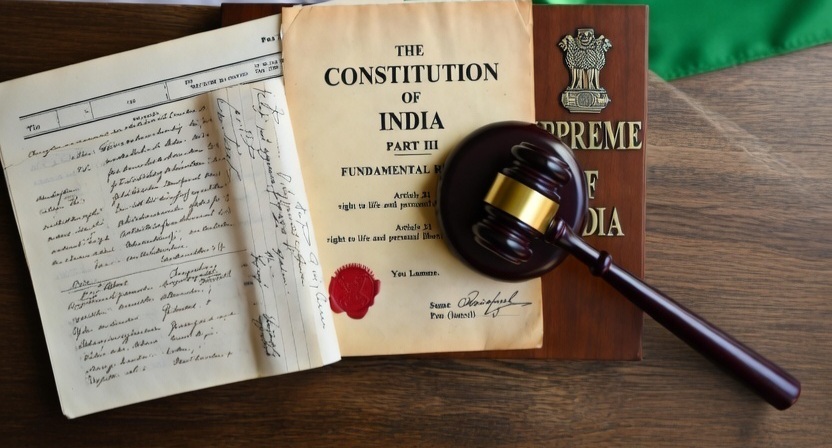
Although the Indian Constitution does not expressly mention the term “privacy”, the Supreme Court of India has interpreted it as a part of the Right to Life and Personal Liberty under Article 21 of the Constitution of India.
Over time, through various judicial decisions, the Indian judiciary has expanded the meaning of personal liberty and recognized privacy as a fundamental right. The landmark judgment in Justice K. S. Puttaswamy v. Union of India finally confirmed that the right to privacy is a constitutionally protected fundamental right.
Meaning of Right to Privacy:
The Right to Privacy means the right of an individual to control personal information and to live without unwarranted intrusion into personal life. It includes protection of personalchoices, family life, bodily autonomy, communication, and data.
Privacy generally includes three important aspects:
- Physical Privacy – Protection of the human body from intrusive actions such asunauthorized medical tests or surveillance.
- Informational Privacy – Protection of personal data and information from misuse.
- Decisional Privacy – Freedom to make personal decisions regarding marriage, relationships, and lifestyle.Thus, privacy is not only about secrecy but also about the freedom to make personal choices without external interference.
Constitutional Basis of Right to Privacy:
Although the Indian Constitution does not explicitly mention the right to privacy, it has been derived from several fundamental rights. The most important provision is Article 21 of the Constitution of India, which states that noperson shall be deprived of life or personal liberty except according to procedure established by law.The Supreme Court has interpreted “life” in a broad sense.
Life does not mean mere animal existence; it includes living with dignity, autonomy, and personal freedom. Privacy is essential for maintaining dignity and therefore forms part of Article 21.
Privacy is also connected with other constitutional provisions such as:Article 19 of the Constitution of India – Freedom of speech and expression, movement, and association.Article 14 of the Constitution of India – Equality before the law.Thus, privacy is protected as an essential element of individual liberty and dignity.
Evolution of the Right to Privacy in India:
The recognition of privacy as a fundamental right did not happen immediately. It developed gradually through judicial interpretation.
1.Early Judicial DecisionsOne of the earliest cases related to privacy was M. P. Sharma v. Satish Chandra. In this case, the Supreme Court held that the Constitution did not provide a specific right to privacysimilar to the Fourth Amendment of the United States Constitution.Another important case was Kharak Singh v. State of Uttar Pradesh. The issue involved police surveillance of a suspect. The majority of judges held that the right to privacy was not explicitly guaranteed under the Constitution. However, Justice Subba Rao in his dissentingopinion stated that privacy is an essential part of personal liberty.Although the majority rejected privacy as a fundamental right, the dissenting opinion later influenced future judicial thinking.
2.Recognition of Privacy in Later CasesGradually, the Supreme Court started recognizing privacy indirectly through other rights.In Gobind v. State of Madhya Pradesh, the Court accepted that privacy could be considered a part of personal liberty under Article 21, although it stated that the right is not absolute. Another important case was R. Rajagopal v. State of Tamil Nadu, also known as the “Auto Shankar Case.” The Court held that a person has the right to safeguard the privacy of their own life, family, marriage, and personal matters.
These decisions gradually strengthened the idea that privacy deserves constitutional protection.
The Puttaswamy Judgment (2017):
The most important development in the recognition of the Right to Privacy came in Justice K.S. Puttaswamy v. Union of India.
This case was related to the Aadhaar scheme and the collection of biometric data of citizens.A nine-judge bench of the Supreme Court was formed to determine whether privacy is a fundamental right.
Decision of the Court:
The Supreme Court unanimously held that the Right to Privacy is a fundamental right protected under Part III of the Constitution.The Court stated that privacy is an intrinsic part of Right to life and personal liberty under Article 21 Freedoms guaranteed under Article 19Equality under Article 14The Court also overruled the earlier judgments in M. P. Sharma v. Satish Chandra and Kharak Singh v. State of Uttar Pradesh to the extent that they denied privacy as a fundamental right.
Importance of the Judgment:
The Puttaswamy judgment is significant for several reasons:
1.It recognized privacy as a fundamental constitutional value.
2.It protected individual autonomy and dignity.
3.It established limits on state surveillance and data collection.
4.It strengthened democracy by protecting citizens from arbitrary state interference.
Scope of the Right to Privacy:
After the Puttaswamy judgment, the right to privacy covers many aspects of human life.
1.Bodily Privacy Individuals have control over their own bodies. This includes protection from forced medical procedures, DNA tests, or biometric data collection without proper legal justification.
2.Informational PrivacyIn the digital age, personal data such as phone records, emails, financial information, and biometric data require protection. The state and private organizations must ensure that personal data is not misused.
3.Decisional AutonomyPrivacy protects the freedom to make personal decisions regarding marriage, sexual orientation, family planning, and lifestyle.
This principle was reinforced in Navtej Singh Johar v. Union of India, where the Supreme Court decriminalized consensual same-sex relationships and recognized personal choice and dignity.
Limitations on the Right to Privacy:
The Right to Privacy is not absolute. The state can impose reasonable restrictions if certain conditions are satisfied.According to the Puttaswamy judgment, any restriction on privacy must satisfy three requirements:
1.Legality – There must be a valid law authorizing the restriction.
2.Legitimate Aim – The law must pursue a legitimate state objective.
3.Proportionality – The restriction must be necessary and proportionate to the objective.For example, the state may collect personal information for national security, prevention of crime, or public welfare, but such actions must follow legal procedures and safeguards.
Privacy in the Digital Age:
In the modern era, technology has created new challenges for privacy protection. Thewidespread use of smartphones, social media, and digital databases has increased the risk of data misuse.
Government programs like Aadhaar involve large-scale collection of personal information. Therefore, strong legal frameworks are required to ensure data protection.
India has introduced data protection laws to regulate how personal information is collected, stored, and used. These laws aim to balance technological development with the protection of individual privacy.
Importance of the Right to Privacy:
The Right to Privacy plays a vital role in a democratic society.
1.Protection of Human DignityPrivacy ensures that individuals can live with dignity and self-respect.
2.Freedom of Personal ChoiceIt allows individuals to make decisions about their personal lives without fear of interference.
3.Protection from State SurveillancePrivacy limits excessive monitoring and control by the government.
4.Encouragement of Individual Development
Personal freedom helps individuals develop their personalities and beliefs.Thus, privacy is essential for maintaining liberty, autonomy, and democratic values.
Conclusion:
The recognition of the Right to Privacy as a fundamental right represents a major milestone in the development of constitutional law in India. Although the Constitution does not explicitly mention privacy, the judiciary has interpreted it as an essential part of the Right to Life and Personal Liberty under Article 21.
Through landmark judgments culminating in the Puttaswamy case, the Supreme Court has affirmed that privacy is intrinsic to human dignity and freedom. At the same time, the Court has clarified that privacy is not absolute and may be subject to reasonable restrictions in the interest of society.
In an era of rapid technological advancement and digital data collection, protecting privacy has become more important than ever. A strong legal framework and responsible governanceare necessary to ensure that the right to privacy remains protected while balancing the needs of national security and public welfare.
Written by:- Pransu, BBA LLB(H),
Chhatrapati Shahu Ji Maharaj University Kanpur, UP
Disclaimer: This article is published for educational and informational purposes only and does not constitute legal advice, legal opinion, or professional counsel. It does not create a lawyer–client relationship. All views and opinions expressed are solely those of the author and represent their independent analysis. Times Law does not endorse, verify, or assume responsibility for the author’s views or conclusions. While editorial standards are maintained, Times Law, the author, and the publisher disclaim all liability for any errors, omissions, or consequences arising from reliance on this content. Readers are advised to consult a qualified legal professional before acting on any information herein. Use of this article is at the reader’s own risk.