Legal Reporter: Yashwant Singh
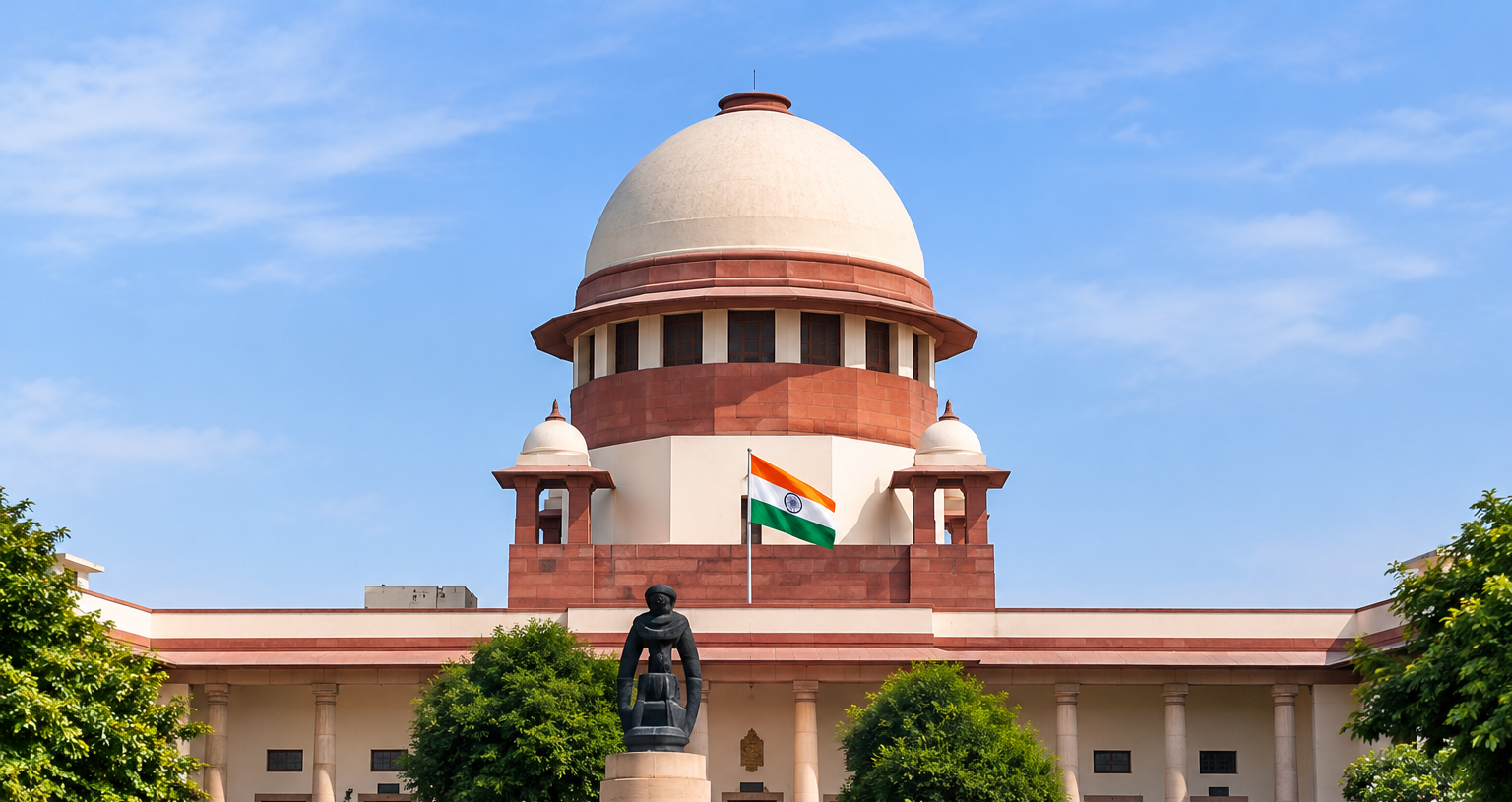
The Supreme Court of India, in State of Andhra Pradesh v. Suda Suresh Veera Venkata Naga Raju (2026), clarified that an arrested person has the right to meet an advocate of their choice during police interrogation, but this does not grant the advocate an unrestricted right to remain physically present throughout the entire interrogation.
A Bench comprising Justice Vikram Nath and Justice Sandeep Mehta examined the scope of Section 38 of the Bharatiya Nagarik Suraksha Sanhita (BNSS), 2023, which protects an arrested person’s right to meet an advocate during interrogation. The provision corresponds to Section 41D of the former Code of Criminal Procedure, 1973.
The case arose from an investigation into an alleged custodial death in Vijayawada, Andhra Pradesh, in which a suspended Police Inspector was implicated. During the investigation, the Special Investigation Team (SIT) sought police custody of the accused for interrogation.
The Judicial Magistrate granted police custody subject to safeguards, including continuous audio-visual recording and the availability of advocates during interrogation. The State challenged these conditions before the Andhra Pradesh High Court, which substantially retained them. The State subsequently approached the Supreme Court, arguing that the restrictions could hamper effective interrogation.
The accused, on the other hand, maintained that such safeguards were necessary to prevent custodial violence, coercion and ill-treatment, particularly in a case involving allegations of custodial death.
Supreme Court’s Observations
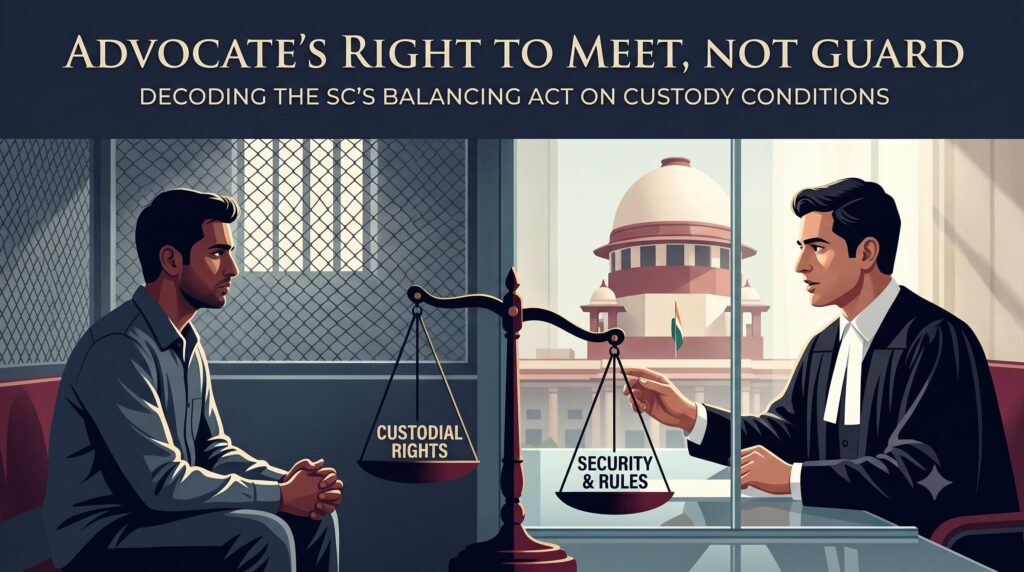
The Supreme Court held that a plain reading of Section 38 BNSS establishes the right of an arrested person to meet an advocate during interrogation. However, the provision does not guarantee the advocate’s continuous physical presence throughout every interrogation session.
The Court distinguished between the right to consult an advocate and the right to have an advocate continuously present during questioning. It observed that an unrestricted requirement of continuous presence would extend beyond the statutory language and could interfere with the effective conduct of an investigation.
At the same time, the Court recognised the importance of safeguards against custodial abuse. Audio-visual recording during questioning and recovery proceedings was emphasised as a protective measure. The Court also considered the practical difficulties associated with requiring continuous video recording while an accused person is being moved from one location to another.
The judgment sought to balance two important concerns: protecting the rights and safety of an arrested person while ensuring that lawful police investigations are not unnecessarily obstructed.
Legal Significance
The ruling clarifies the scope of Section 38 BNSS by confirming that the right to meet an advocate during interrogation does not automatically translate into a right to uninterrupted legal representation inside the interrogation room.
The decision also highlights the importance of effective safeguards against custodial violence, including appropriate audio-visual recording and compliance with applicable legal protections.