REPORTED BY – VINITA PANDAY
Matter: Bar Council of India v. Union of India
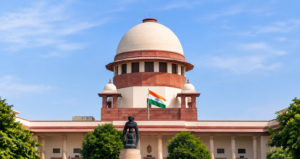
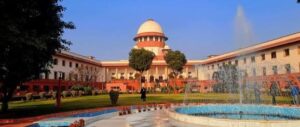
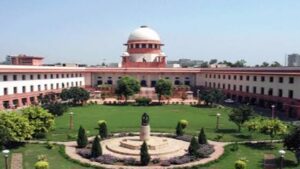
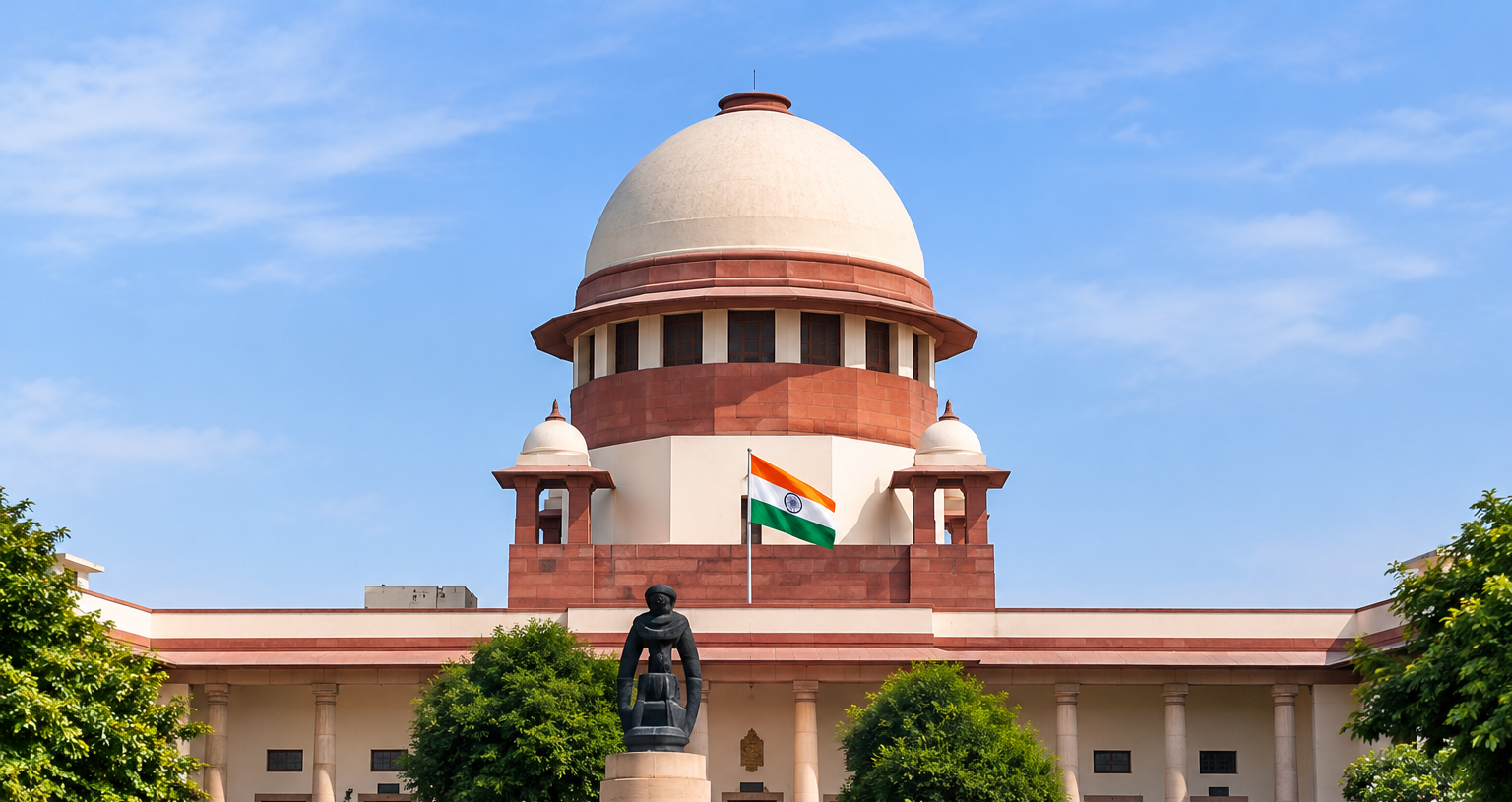
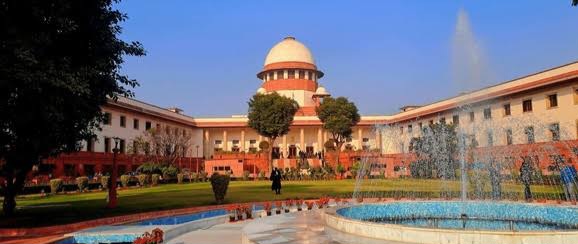
Court: Supreme Court of India
Bench: Justice Vikram Nath, Justice Sandeep Mehta and Justice Augustine George Masih
Status: Judgment Reserved
The Supreme Court of India on 6 October 2026 reserved its judgment in a batch of petitions concerning the mandatory attendance requirements applicable to law students. The case has become an important issue in legal education because it concerns whether students who do not meet the prescribed attendance requirement can be prevented from appearing in examinations or from continuing their academic progression. The decision is expected to clarify the legal position on attendance requirements in law colleges and the regulatory role of the Bar Council of India (BCI).
The dispute originates from a November 2025 judgment of the Delhi High Court. The High Court had considered the issue of attendance requirements in law colleges and issued directions concerning students who were unable to meet the prescribed minimum attendance. The High Court had directed the Bar Council of India to reconsider the mandatory attendance norms applicable to three-year and five-year LL.B. courses. It had also held that students enrolled in recognised law institutions should not be detained from appearing in examinations or prevented from continuing their academic progression solely because of shortage of attendance.
The Delhi High Court’s decision had wider implications for legal education institutions across the country. Attendance requirements are generally intended to ensure that students regularly participate in classroom teaching, academic discussions and other educational activities. In legal education, regular attendance is considered particularly important because the profession requires not only theoretical knowledge but also an understanding of legal reasoning, advocacy, professional ethics and practical aspects of law.
The issue reached the Supreme Court after the Bar Council of India and SVKM’s Narsee Monjee Institute of Management Studies (NMIMS) challenged the Delhi High Court’s directions. The petitioners argued that removing or substantially diluting mandatory attendance requirements could adversely affect academic discipline and the quality of legal education. They also raised concerns about institutional autonomy and the professional standards expected from students who would eventually enter the legal profession.
The Supreme Court had earlier intervened in the matter. In May 2026, the Court stayed the operation of paragraph 249 of the Delhi High Court judgment prospectively. The interim order became important because it meant that the effect of the High Court’s directions would not operate indefinitely for future academic sessions while the Supreme Court considered the challenge.
In a subsequent order dated 21 July 2026, the Supreme Court also dealt with the situation of students whose academic sessions were already ongoing when the Delhi High Court delivered its judgment. The Court noted that some students had acted under a bona fide belief that attendance shortage would not prevent them from appearing in examinations. As a one-time measure, the Court directed that students whose academic session was ongoing when the Delhi High Court judgment was delivered should not be detained from appearing in thefinal examinations for that academic session because of attendance shortage. The Court also made provisions regarding supplementary examinations in appropriate circumstances.
The central question before the Supreme Court is therefore not simply whether students should attend classes, but how attendance requirements should legally operate within the framework of legal education. The Court is required to balance several competing considerations, including students’ academic interests, institutional autonomy, regulatory standards and the quality of professional legal education. The Bar Council of India has an important role in regulating legal education and professional standards. The BCI has prescribed rules relating to legal education, including requirements concerning attendance. The challenge before the Supreme Court therefore also raises questions about the extent to which regulatory bodies can prescribe academic conditions for students and the circumstances in which courts may interfere with such regulations.
On the other side, the issue also involves the rights and academic interests of students. A strict attendance requirement may create serious academic consequences for a student who falls short of the prescribed percentage. The Delhi High Court had taken the view that students should not automatically lose the opportunity to take examinations or continue their studies solely because of attendance shortage. The Supreme Court’s final judgment will determine how far that approach can continue. During the Supreme Court proceedings, the importance of maintaining discipline in legal education was also highlighted. The Court had earlier expressed concerns about the consequences of dilution of attendance requirements and observed that several law institutions, including National Law Universities and other colleges, had been affected by the uncertainty surrounding the issue. The matter is particularly significant because the outcome could affect law students across India. If the Supreme Court upholds strict attendance requirements, law colleges may continue to enforce minimum attendance as a condition for examination eligibility, subject to the final terms of the judgment. On the other hand, if the Court substantially supports the Delhi High Court’s approach, institutions may have to reconsider how attendance shortage is dealt with.
The case also raises an important question about the relationship between judicial intervention and educational policy. Courts generally examine whether administrative and regulatory decisions comply with law, fairness and constitutional principles. At the same time, academic institutions and specialised regulatory bodies possess expertise in determining educational standards. The final judgment may therefore provide guidance on the limits of judicial intervention in matters concerning professional education. Another important aspect is the distinction between attendance as an academic requirement and attendance as an absolute bar to examination. The final judgment may clarify whether a shortage of attendance should automatically result in detention from examinations or whether institutions should have flexibility to consider individual circumstances. Such clarification would be particularly valuable for law colleges and students because different institutions have faced different situations following the Delhi High Court judgment.
The Supreme Court heard arguments from the Bar Council of India, law institutions and other parties before reserving the judgment on 6 October 2026. With the arguments now concluded, the legal position will depend on the final judgment of the three-judge Bench. The case is highly relevant to the legal education system because it directly affects the academic progression of law students. It also involves broader questions concerning professional standards, regulatory authority, institutional autonomy and the role of courts in educational matters. For law students, the judgment will be particularly significant because attendance is an issue that directly affects eligibility for examinations and academic progression. For law colleges and universities, the decision may determine the extent to which they can enforce existing attendance requirements. For the Bar Council of India, the judgment may provide important guidance regarding its authority to regulate legal education standards.
At present, the Supreme Court has reserved its judgment, meaning that no final decision on the core legal issue has yet been delivered. Therefore, the final position regarding mandatory attendance requirements will become clear only after the Court pronounces its judgment. Why this matter is important: The case directly concerns law students, legal education, academic discipline, institutional autonomy and the regulatory powers of the Bar Council of India. Its final outcome may have an impact on law colleges, universities and students across India. It is therefore a highly relevant development for a student legal-media report.