Riya Kumari
BA LL.B (2nd Year), School of Law, United University, Prayagraj
ABSTRACT
The concept of ‘victimhood’ in Indian criminal jurisprudence has, for long, been construed through a predominantly gendered lens — one that renders the male victim legally and socially invisible. While the law’s heightened solicitude towards women and children as vulnerable groups is both understandable and constitutionally grounded, it has inadvertently created a structural blind spot with respect to male victims of crime. This article undertakes a systematic examination of the legal position of male victims in India, with particular reference to the transformative criminal law reforms of 2023–24, namely the Bharatiya Nyaya Sanhita (BNS), Bharatiya Nagarik Suraksha Sanhita (BNSS), and Bharatiya Sakshya Adhiniyam (BSA).
The article identifies the typology of offences wherein men remain disproportionately underprotected, critically evaluates the persisting lacunae in genderspecific statutory provisions, and surveys the constitutional and statutory remedies available to male victims. It further draws upon landmark judicial pronouncements to demonstrate that the courts have, to a limited extent, acknowledged the vulnerability of male litigants in matrimonial and allied disputes. The article concludes by advocating for a gender-neutral legislative framework that upholds the constitutional mandate of equality without dismantling the protective architecture constructed for historically disadvantaged groups.
Keywords: Male victims, Bharatiya Nyaya Sanhita, gender-neutral laws, false allegations, domestic violence, misuse of law, victim rights, criminal law reform, Section 377, victim compensation.
I. INTRODUCTION
Criminal law, in both its historical development and contemporary application, has largely constructed the ‘victim’ as a figure of feminine or juvenile vulnerability. This normative assumption, while rooted in empirical realities of gendered violence, has progressively hardened into a legislative default that either overlooks or inadequately addresses the victimisation of adult men. The result is a systemic asymmetry: on one hand, a well-articulated scaffold of protective statutes shielding women from domestic violence, sexual offences, and matrimonial cruelty; on the other, a nearcomplete legislative silence on the analogous experiences of men.
This silence is not merely an academic grievance. It carries tangible legal consequences. Men who are subjected to physical abuse within domestic settings, falsely implicated under matrimonial penal provisions, or victimised through sexual misconduct find themselves in a legal system that, while nominally gender-neutral in its foundational definitions, is functionally skewed against their recognition as victims deserving of targeted protection and relief.
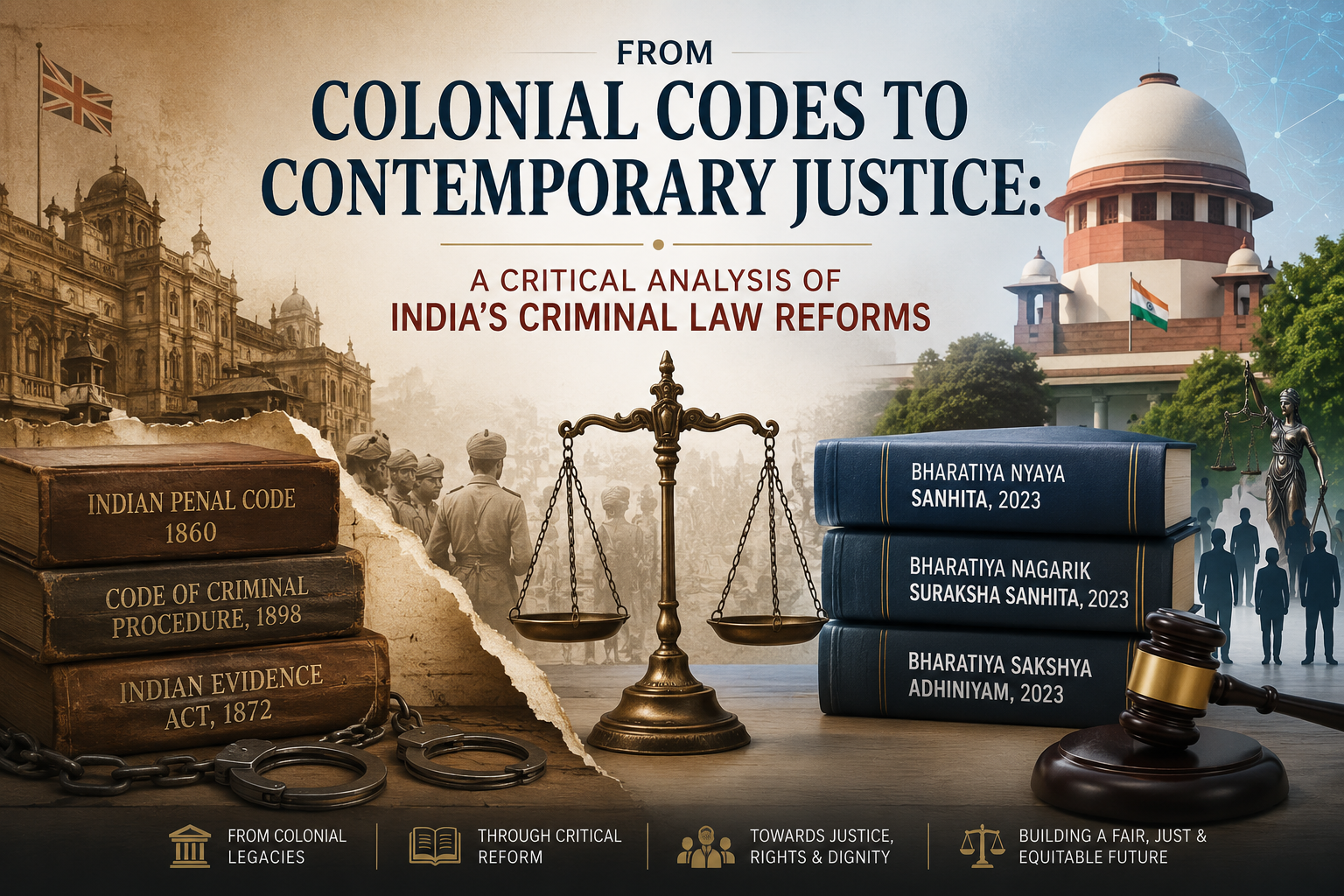
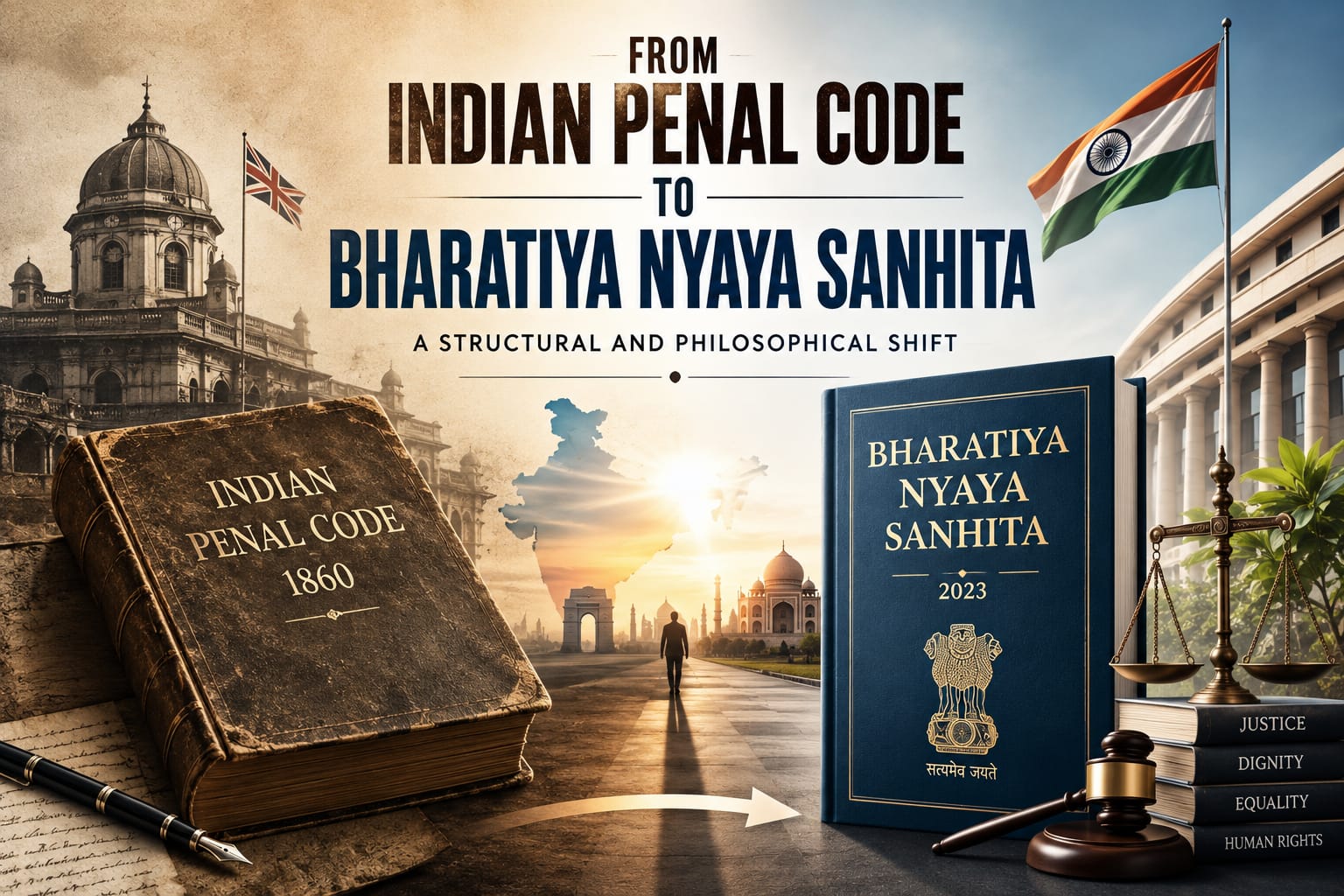
The year 2024 witnessed a watershed moment in Indian criminal law with the enforcement of three new codes — the Bharatiya Nyaya Sanhita (BNS), 2023, the Bharatiya Nagarik Suraksha Sanhita (BNSS), 2023, and the Bharatiya Sakshya Adhiniyam (BSA), 2023 — replacing the Indian Penal Code, 1860, the Code of Criminal Procedure, 1973, and the Indian Evidence Act, 1872, respectively. These reforms, while significant in modernising the procedural and substantive architecture of criminal justice, have not substantially altered the position of male victims. The new codes broadly preserve the gender-asymmetric structure of their predecessors, making it imperative to critically examine what remedies, if any, are now available to men who suffer criminal harm.
This article proceeds in the following sequence: it first surveys the concept of ‘victim’ under the new criminal law regime; next, it catalogues the categories of crime in which male victimisation is most prevalent yet least addressed; it then appraises the constitutional and statutory rights of male victims alongside available judicial remedies; and finally, it articulates the case for gender-neutral reform within a framework sensitive to substantive equality.
II. THE CONCEPT OF ‘VICTIM’ UNDER INDIAN CRIMINAL LAW
The BNSS, 2023 defines a ‘victim’ in a broad and facially inclusive manner, encompassing any person who has suffered any loss or injury caused by reason of the act or omission for which the accused person has been charged.¹ This definition, mirroring its predecessor under the CrPC (as amended in 2008), is deliberately gender-neutral on its face. It makes no textual distinction between male and female complainants, nor does it restrict victimhood to any particular category of harm.
However, definitional neutrality does not guarantee substantive equality. The practical utility of being recognised as a ‘victim’ under the BNSS depends enormously on the substantive offences enumerated in the BNS and the procedural machinery made available for their enforcement. In this respect, the law remains deeply asymmetric. Many of the most grievous offences that men experience — including domestic abuse, sexual misconduct, and false matrimonial complaints — either have no gender-neutral counterpart in the BNS, or are practically inaccessible to male complainants due to entrenched social and institutional biases.
It is therefore submitted that the question of male victimisation in Indian criminal law cannot be resolved at the level of definition alone. It demands a substantive recalibration of specific statutory provisions, prosecutorial sensitisation, and an institutional culture that treats gendered victimisation as a concern applicable to persons of all genders.
III. CATEGORIES OF CRIMINAL VICTIMISATION OF MEN
A. Domestic Violence and Intimate Partner Abuse
The Protection of Women from Domestic Violence Act, 2005 (PWDVA) is a landmark piece of civilcriminal legislation that offers a comprehensive regime of protection orders, residence rights, and monetary relief to women subjected to domestic violence. Its very title, however, forecloses its application to male victims. There exists no equivalent statute — central or state — that extends analogous protection to men who suffer physical, emotional, or economic abuse at the hands of intimate partners.
This legislative vacuum is not reflective of social reality. Research consistently indicates that men are subjected to intimate partner violence in non-trivial numbers, though underreporting is rampant owing to social stigma and the absence of accessible legal recourse.² The male victim of domestic abuse must currently resort to ordinary criminal remedies under the BNS — provisions relating to assault, hurt, grievous hurt, and wrongful confinement — remedies that are procedurally cumbersome and carry none of the protective immediacy that the PWDVA affords to women.
A critical dimension of this underreporting is social conditioning. From childhood, Indian males are socialised to suppress expressions of pain and vulnerability — a cultural imperative captured in the common refrain ‘mard ko dard nahi hota’ (‘men do not feel pain’). This conditioning produces a chilling effect on reporting: men who suffer domestic abuse fear being ridiculed, disbelieved, or even prosecuted themselves if they approach law enforcement. The result is a self-reinforcing cycle of invisibility — men do not report, so data is sparse, so lawmakers perceive no need for intervention, so men continue to suffer without recourse.
B. Misuse of Matrimonial Penal Provisions
Perhaps the most litigated dimension of male victimisation in recent Indian jurisprudence is the alleged misuse of Section 498A of the Indian Penal Code — now transposed into Sections 85 and 86 of the BNS — which penalises cruelty by a husband or his relatives towards the wife. The provision carries the twin aggravations of cognisability and non-baiability, making arrest the immediate consequence of complaint.
The Supreme Court, in its celebrated decision in Arnesh Kumar v. State of Bihar,³ issued mandatory guidelines restraining police officers from mechanically arresting accused persons in Section 498A cases without prior application of mind, noting with concern that arrests had become a tool of harassment rather than a genuine exercise of law enforcement. This was followed by Rajesh Sharma v. State of Uttar Pradesh,⁴ where the Court sought to institutionalise family welfare committees as a preliminary filter mechanism, though these guidelines were subsequently diluted. What these decisions cumulatively reveal is a judicial acknowledgment that the male accused — and by extension, his family — can be, and frequently is, victimised through the weaponisation of protective statutes.
Under the new regime, Sections 85–86 BNS retain substantially the same character as Section 498A IPC, including its gendered scope. The legislature has thus missed a significant opportunity to either introduce safeguards against misuse or to create a corresponding provision for male victims of matrimonial cruelty — a lacuna that courts will be called upon to address through judicial creativity in the years ahead.
C. Sexual Offences Against Men — The Section 377 Vacuum
The architecture of sexual offence law in India is almost entirely structured around the female complainant. Rape under Section 63 BNS (erstwhile Section 375 IPC) is defined with exclusive reference to a male perpetrator and a female victim. The offence of sexual harassment under the Sexual Harassment of Women at Workplace (Prevention, Prohibition and Redressal) Act, 2013 is similarly limited in scope to women.
The Justice J.S. Verma Committee, constituted in the aftermath of the Nirbhaya tragedy in 2012– 13, expressly recommended that sexual offences be made gender-neutral, recognising that men and transgender persons could equally be victims of sexual violence.⁵ This recommendation was not incorporated in the Criminal Law (Amendment) Act, 2013, nor has it found reflection in the BNS.
The rephrasing of Section 377 IPC in the BNS creates a particularly acute legal vacuum. Section 377 IPC had historically served a dual function: while it was controversially used to criminalise consensual same-sex relations (a use struck down in Navtej Singh Johar v. Union of India, 2018), it simultaneously provided the only statutory basis under which the non-consensual penetrative sexual assault of a male victim could be prosecuted. The BNS has substantially restructured this provision, and its new formulation — Section 377 equivalent — has been criticised for narrowing the protective scope to the extent that adult male rape in non-consensual circumstances may now fall into a genuine legal grey zone.
This ‘legal vacuum’ is not merely theoretical. In practice, a male victim of sexual assault who approaches law enforcement today may find that no provision of the BNS squarely captures his experience, leaving prosecutors to resort to general provisions of assault and hurt that are wholly inadequate to address the gravity and specificity of sexual violence. The urgent need for a genderneutral sexual offence framework — covering penetrative and non-penetrative assault regardless of the gender of victim or perpetrator — cannot be overstated. Courts will inevitably be called upon to grapple with this gap through expansive constitutional interpretation under Articles 14 and 21.
D. Physical Assault and Criminal Intimidation
Unlike the above categories, men do find relatively adequate protection as victims of physical violence under the general provisions of the BNS. Offences of assault (Section 130), hurt (Section 115), grievous hurt (Section 116), criminal intimidation (Section 351), and wrongful confinement (Section 126) are, by their terms, gender-neutral. Men who are victims of mob violence, gang assault, or targeted physical attacks can avail of these provisions with the full machinery of the criminal justice system.
E. Financial and Cyber Offences
Men are frequently targeted by fraud, cheating, criminal breach of trust, and the rapidly expanding category of cyber offences including phishing, online financial fraud, identity theft, and extortion. These offences are comprehensively covered under the BNS and the Information Technology Act, 2000, without any gender restriction. In this domain, the legal framework is effectively neutral and accessible to male victims.
F. Mental and Emotional Harassment
While physical harm lends itself to evidentiary documentation, the mental and emotional victimisation of men — through sustained harassment, public humiliation, defamatory allegations, or coercive control — is considerably more difficult to litigate. The BNS does provide for criminal defamation (Section 356) and criminal intimidation, but these provisions require a threshold of public damage or threatened injury that does not always capture the insidious, everyday nature of emotional abuse.
IV. COMPARATIVE TABLE: IPC/CrPC vs. BNS/BNSS — IMPACT ON MALE VICTIMS
The following table presents a structured comparison of key provisions under the old and new criminal law regimes, evaluated specifically from the perspective of male victimisation:
| Offence | IPC / CrPC / IEA(Pre 2024) | BNS / BNSS / BSA (Post-2024) | Impact on Male Victims |
| Cruelty by Spouse | Sec. 498A IPC – gendered, wife only | Sec. 85–86 BNS – same gendered scope retained | No protection for husbands facing cruelty |
| Rape / Sexual Assault | Sec. 375 IPC – male perpetrator, female victim | Sec. 63 BNS – same binary retained | Male rape victims remain uncovered |
| Domestic Violence protection | PWDVA 2005 – women only | No new statute enacted | Complete legislative vacuum for men |
| Arrest in Matrimonial Cases | Mechanical arrests under 498A preArnesh Kuma | Sec. 35 BNSS – arrest guidelines, Arnesh Kumar binding | Partial improvement; misuse still possible |
| Quashing of False FIR | Sec. 482 CrPC – High Court inherent power | Sec. 528 BNSS – preserved & reaffirmed | Remedy available but postdamage |
| Victim Compensation | Sec. 357A CrPC – no gender bar, discretionary | Sec. 396 BNSS – mandatory scheme, gender-neutral text | De jure equal; de facto rarely availed by men |
| Defamation / Reputation | Sec. 499–500 IPC; civil tort | Sec. 356 BNS – retained, some clarifications | Available but high evidentiary threshold |
| Physical Assault | Sec. 319–326 IPC – gender-neutral | Sec. 115–118 BNS – gender-neutral retained | Adequate protection maintained |
| Cyber / Financial Fraud | IT Act 2000 + IPC – gender-neutral | IT Act 2000 + BNS – gender-neutral retained | Adequate protection maintained |
As the table demonstrates, the new codes represent a procedural modernisation rather than a substantive gender rebalancing. The protective gaps that existed under the IPC regime have been largely inherited, not remedied, by the BNS framework.
V. RIGHTS OF MALE VICTIMS UNDER THE CONSTITUTIONAL AND STATUTORY FRAMEWORK
Notwithstanding the substantive lacunae identified above, male victims do enjoy a range of legal rights that, if vigorously asserted, can provide meaningful relief.
At the constitutional level, Article 14 guarantees equality before the law and equal protection of the laws — a provision that has been read expansively by the Supreme Court to prohibit not merely formal discrimination but substantive arbitrariness. A legal regime that systematically excludes male victims from protection available to similarly situated female victims may, in appropriate cases, be challenged as violative of Article 14. Article 21, which protects the right to life and personal liberty, has been judicially interpreted to encompass the right to live with dignity, the right to mental health, and the right to be free from arbitrary deprivation of liberty — all of which are directly implicated in the experience of male victimisation.⁶
Critically, Article 21 also protects the right to reputation as an aspect of the right to life with dignity. Where a man is falsely accused — particularly under matrimonial provisions that carry the stigma of domestic violence or cruelty — the constitutional injury is not limited to physical liberty. A false FIR can destroy careers, disrupt family relationships, damage community standing, and cause irreversible psychological harm. Courts have recognised that the ‘right to reputation’ inheres in Article 21 (Umesh Kumar v. State of Andhra Pradesh, 2013 SCC), and this constitutional anchor provides a powerful basis for challenging malicious prosecution.
At the statutory level, a male victim retains, inter alia: the right to register a First Information Report (FIR) under Section 173 BNSS; the right to a fair and impartial investigation; the right to be represented by a counsel of his choice; the right to participate in the trial through the mechanism of victims’ rights now increasingly recognised by courts; the right to seek compensation under the victim compensation scheme mandated by Section 396 BNSS; and the right to approach the High Court under Section 528 BNSS (corresponding to the erstwhile Section 482 CrPC) to quash proceedings that are manifestly false or constitute an abuse of the process of law.
VI. VICTIM COMPENSATION UNDER SECTION 396 BNSS — DOES GENDER EQUALITY EXIST IN PRACTICE?
Section 396 of the BNSS mandates every State Government to prepare a scheme for providing funds for the purpose of compensation to the victim or his dependants who have suffered loss or injury as a result of the crime. The provision is textually gender-neutral: it does not distinguish between male and female victims, and applies uniformly to all persons who satisfy the threshold of ‘loss or injury.
The following flowchart illustrates the process by which a male victim may seek compensation under this provision — and the structural barriers that, in practice, impede its effective utilisation:
| STEP 1 | Male Victim suffers criminal harm |
| STEP 2 | Register FIR under Sec. 173 BNSS → Investigation initiated |
| STEP 3 | Trial commences → Victim identified in chargesheet |
| STEP 4 | Application for compensation filed under Sec. 396 BNSS (by victim/court suo motu) |
| STEP 5 | State Legal Services Authority (SLSA) examines claim — gender-neutral criteria apply |
| STEP 6 | Compensation awarded / denied → Appeal before High Court under Sec. 528 BNSS |
| REALITY CHECK⚠ | Despite gender-neutral text, male victims rarely apply. No dedicated helpline or fast-track exists for male claimants. Social stigma + lack of awareness = severe under-utilisation. |
Research and anecdotal evidence from victim support organisations reveal a stark contrast between the de jure position of equality under Section 396 BNSS and the de facto experience of male claimants. Several structural barriers operate to exclude men from meaningful access to compensation:
• Awareness deficit: Male victims are rarely informed by police or prosecutors of their right to apply for compensation, particularly in matrimonial or assault cases where the accused is a woman.
• Social stigma: Men who self-identify as crime victims — particularly in cases of domestic abuse or sexual assault — face ridicule and disbelief from police personnel and legal aid providers.
• No dedicated infrastructure: Unlike female victims (who may access One Stop Centres, Ujjawala homes, and women helplines), male victims have no equivalent state-sponsored support infrastructure.
• Scheme design bias: Several state-level compensation schemes specify higher amounts for female victims of sexual or domestic violence, with no equivalent tariff for male victims of analogous harm.
The net result is that Section 396 BNSS, though facially neutral, functions in practice as a provision primarily accessed by female complainants. Legislative intervention to create explicit male-inclusive provisions within state compensation schemes, coupled with institutional sensitisation of the criminal justice apparatus, is urgently required.
VII. LEGAL REMEDIES AVAILABLE TO MALE VICTIMS
A. Quashing of False FIR / Proceedings (Section 528 BNSS)
Section 528 BNSS preserves the inherent power of the High Court to make such orders as may be necessary to give effect to any order under the Code or to prevent abuse of the process of any court or otherwise to secure the ends of justice. This provision has become an indispensable safeguard for men falsely implicated in matrimonial or other criminal proceedings. The courts have, over decades, evolved a detailed jurisprudence on the circumstances that warrant quashing — including settlement between parties, patent absence of ingredients of the offence, and manifest malafides on the part of the complainant.
B. Defamation and Reputation Protection
Where a man’s reputation has been publicly damaged through false allegations — whether in social media, press statements, or judicial proceedings — he may pursue both criminal defamation under Section 356 BNS and civil defamation under the law of torts. The intersection of these remedies offers a reasonably robust, if underutilised, avenue of relief.
C. Family Law Remedies
Under personal law statutes, including the Hindu Marriage Act, 1955, a husband may seek dissolution of marriage on the ground of cruelty — a ground that courts have consistently interpreted to include mental cruelty, including the filing of false criminal complaints. Men may also apply for custody of children and challenge maintenance orders through revision and appeal. The Special Marriage Act, 1954 provides analogous remedies to persons of all faiths.
D. Counter-Complaints and Prosecutions
Nothing in law prevents a male victim from filing a counter-complaint against a complainant who has proceeded against him maliciously. Where the ingredients of offences such as making a false statement before a public servant, causing disappearance of evidence, or criminal conspiracy are satisfied, a counter-FIR may lie. Additionally, a complaint for malicious prosecution — both in its criminal and civil dimensions — may serve as a deterrent against instrumentalised use of the criminal justice system.
VIII. JUDICIAL APPROACH TO MALE VICTIMISATION
Indian courts have, with measured but increasing frequency, acknowledged the vulnerability of male litigants within the criminal justice system, particularly in the context of matrimonial disputes. The Supreme Court’s intervention in Arnesh Kumar constituted a structural safeguard against custodial harassment of men accused in matrimonial cases, while Rajesh Sharma — though subsequently modified — demonstrated an awareness of the lived reality that protective laws can be, and are, misused.
Family courts and High Courts have, in a growing number of cases, granted divorce to husbands on the ground of mental cruelty caused by the wife’s filing of false criminal cases. The recognition of ‘mental cruelty’ as encompassing systemic legal harassment marks a significant jurisprudential development that, while not amounting to the recognition of men as a protected class under criminal law, at least acknowledges the legal harm inflicted upon them.
What remains conspicuously absent, however, is a comprehensive constitutional challenge to the gender-exclusivity of statutes like the PWDVA or the sexual offences provisions of the BNS — a challenge that, if entertained and sustained, could fundamentally reorient the legislative approach to victimhood in India.
IX. THE CASE FOR GENDER-NEUTRAL CRIMINAL LEGISLATION
The demand for gender-neutral criminal laws in India must be situated within the broader constitutional commitment to substantive equality under Articles 14, 15, and 21. It must, equally, be insulated from the mischaracterisation that it seeks to dismantle protections for women — a charge that has, regrettably, been levelled against proponents of legal reform in this area.
The argument, properly stated, is this: just as women and children are entitled to protection from violence and exploitation, so too are men who suffer analogous harm. The existence of one group’s vulnerability does not logically negate the existence of another’s. A legal system that is truly committed to justice cannot afford to be selectively sympathetic to suffering on the basis of the sufferer’s gender. Gender neutrality in law is not a zero-sum proposition — extending protection to male victims does not deprive female victims of their existing safeguards.
Concretely, the following reforms merit serious legislative consideration:
• Enactment of a gender-neutral domestic violence statute — or amendment of the PWDVA to extend its protective framework to all victims irrespective of gender, on the model of the United Kingdom’s Domestic Abuse Act, 2021.
• Introduction of gender-neutral provisions for sexual offences in the BNS, as recommended by the Verma Committee, to close the legal vacuum created by the restructuring of Section 377.
• Creation of dedicated helplines, legal aid cells, and shelter facilities for male victims of crime, on par with the infrastructure available to female victims.
• Establishment of a statutory framework for penalising the deliberate misuse of protective criminal provisions — including provisions for compensation to accused persons ultimately found to be falsely implicated.
• Inclusion of male victims within the ambit of state-sponsored victim support programmes under Section 396 BNSS, with explicit awareness campaigns targeting male claimants.
• Police sensitisation training that recognises male victimisation as a genuine and legitimate category of complaint warranting the same seriousness of response as female victimisation.
X. CONCLUSION
The position of men as victims of crime in India occupies an uncomfortable and largely unaddressed corner of the criminal law landscape. While the definitional framework of the new criminal codes is facially inclusive, the substantive provisions, procedural mechanisms, and institutional culture of the criminal justice system continue to treat male victimisation as an anomaly rather than a reality deserving of structured legal response.
The three new codes — BNS, BNSS, and BSA — represent a historic opportunity for legislative renewal. That this opportunity has not been fully utilised to address the gaps identified in this article — particularly the sexual offence vacuum left by the restructuring of Section 377, the absence of any gender-neutral domestic violence statute, and the practical inaccessibility of victim compensation for male claimants — is a matter of grave concern for the integrity of the constitutional promise of equality.
The recognition of male victims demands neither the subordination of women’s rights nor the dismantling of protective statutes. It demands, rather, a mature legal system willing to acknowledge that harm does not discriminate by gender, and that justice — to be worthy of the name — must not either.
The path forward lies in the confluence of legislative reform, judicial creativity, and a broader social willingness to destigmatise male victimisation. This must include dismantling the deeply entrenched cultural conditioning that equates masculinity with imperviousness to harm. Only when these forces operate in concert will the promise of constitutional equality, enshrined in the founding text of the Republic, be fully redeemed.
FOOTNOTES & REFERENCES
- Section 2(y), Bharatiya Nagarik Suraksha Sanhita, 2023.
- See generally, Dutton D.G., ‘Rethinking Domestic Violence’ (UBC Press, 2006); for Indian context, see Dasgupta S.D., ‘A Framework for Understanding Women’s Use of Nonlethal Violence in Intimate Heterosexual Relationships’, (2002) 8(6) Violence Against Women 1364.
- Arnesh Kumar v. State of Bihar & Anr., (2014) 8 SCC 273.
- Rajesh Sharma & Ors. v. State of Uttar Pradesh & Anr., (2018) 10 SCC 472.
- Report of the Committee on Amendments to Criminal Law (Justice J.S. Verma Committee), January 2013, at pp. 109– 116.
- Maneka Gandhi v. Union of India, (1978) 1 SCC 248; Francis Coralie Mullin v. Administrator, Union Territory of Delhi, (1981) 1 SCC 608.
- Navtej Singh Johar v. Union of India, (2018) 10 SCC 1 — decriminalised consensual same-sex relations but left open the question of male rape under Section 377.
- Umesh Kumar v. State of Andhra Pradesh, (2013) 10 SCC 591 — right to reputation as an aspect of Article 21.
© 2024 Legal Research Journal on Criminal Law & Justice. All rights reserved.
Disclaimer: This article is published for educational and informational purposes only and does not constitute legal advice, legal opinion, or professional counsel. It does not create a lawyer–client relationship. All views and opinions expressed are solely those of the author and represent their independent analysis. Times Law does not endorse, verify, or assume responsibility for the author’s views or conclusions. While editorial standards are maintained, Times Law, the author, and the publisher disclaim all liability for any errors, omissions, or consequences arising from reliance on this content. Readers are advised to consult a qualified legal professional before acting on any information herein. Use of this article is at the reader’s own risk.